Signs the roof has had its day
Older polycarbonate roofs tend to show their age in similar ways. Panels discolour, slip down the bars or crack, and the rain on them gets louder. Leaks around the ridge or along the box gutter are common once seals have aged. Inside, the room can become too hot on a sunny afternoon and too cold to sit in during winter, so it ends up used for storage.
Older glass roofs can suffer too: misted units, worn seals and the same swings in temperature. If one or more of these sounds familiar, it is worth having the roof looked at rather than replacing panels one at a time.
Solid tiled, glass or polycarbonate
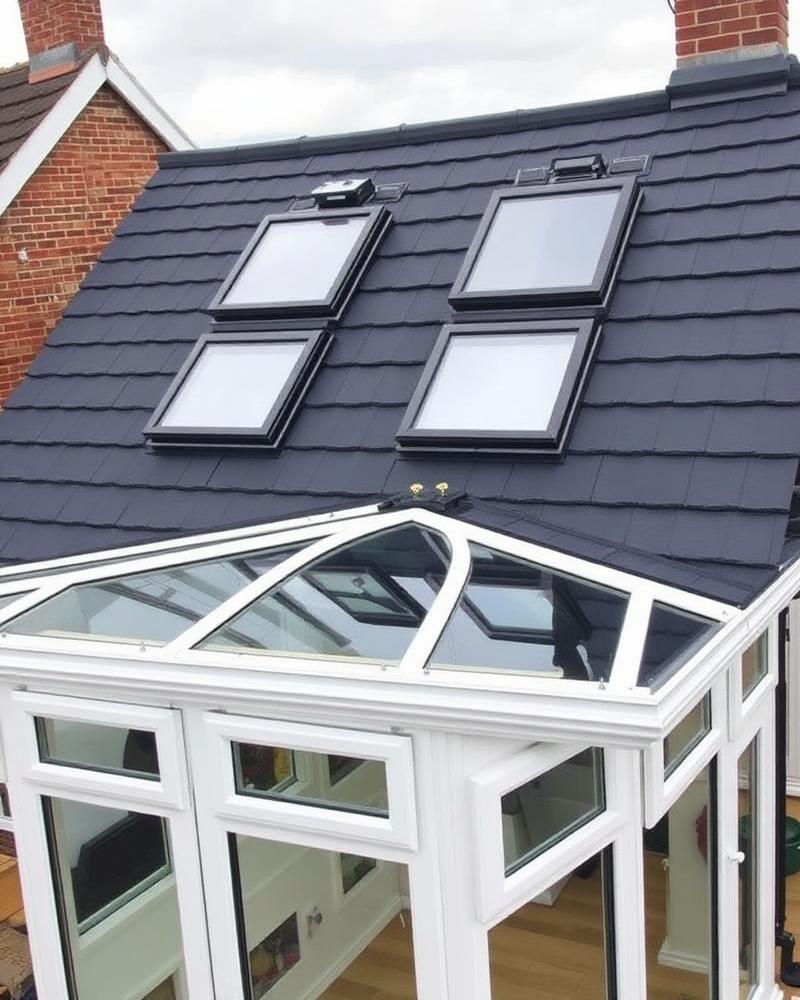
A solid tiled roof replaces the old covering with an insulated structure and a lightweight tiled finish, and makes the conservatory feel much more like part of the house. It is quieter in the rain and keeps temperatures steadier. You can add roof lights or a lantern if you want to keep some light from above.
A modern glass roof keeps the bright, open feel of a conservatory, with glass designed to control heat and glare much better than older units. Polycarbonate is still available and is the lightest option; compare its specification with the glass and solid alternatives before deciding. Our guide to tiled vs glass conservatory roofs explains the trade-offs in more detail.
Why frames and base are surveyed first
A new roof sits on the existing frames, dwarf wall and base, and a solid roof is heavier than the polycarbonate it replaces. So before quoting, we look at what is already there: the condition of the frames, whether the walls are level and sound, and any signs of movement or damp.
If the existing structure is in good condition, the new roof can usually go on top of it. If not, we will explain what would need to be done first. Our main conservatory roof replacement page covers the systems we fit.
Building control
As our guide on building regulations for a conservatory roof replacement explains, a conservatory is generally exempt from building regulations while it stays a conservatory. Changing to a solid, insulated roof may take it out of that exemption, and the load on the existing frames and base also needs checking.
We cover this at the survey, and where building control applies you should receive the notification and a completion certificate at the end of the job.
The inside finish
With a solid roof, the inside is usually finished with a plastered ceiling, so the room looks and feels like an extension of the house. Downlights can be fitted into the ceiling, which makes the room more usable in the evenings.
With a glass roof the inside stays open to the sky, and the finish is about the internal trims and how the roof meets the walls of the house. We talk through the finish at the survey so you know what the room will look like when we leave.
Survey to written quote
We visit, look at the existing roof, frames and base, measure the conservatory and talk through roof types. You then receive a written quote. We beat any like-for-like quote, and the work is covered by our 10-year guarantee.
For a guide to the factors that shape the price, see the conservatory roof replacement cost guide. If you are thinking about the whole room, our conservatories in Bristol page covers new builds, and we also replace roofs in nearby Filton.
Frequently asked questions
Can a new roof go on my existing conservatory?
Often, yes, if the frames, walls and base are in good condition. We check them at the survey before recommending a roof type.
Will a solid roof make the room too dark?
A solid roof does reduce light from above, but roof lights or a lantern can bring some of it back. Glass roofs keep the room bright if light matters most to you.
Is a glass roof better than polycarbonate?
Modern glass roofs handle heat and glare better than older polycarbonate and are quieter in the rain. Polycarbonate is lighter and simpler; compare daylight, roof weight and the intended use of the room when choosing between them.
Do I need building control for a tiled roof?
Changing to a solid, insulated roof may take the conservatory out of the usual exemption, so building control may apply. We explain what applies to your conservatory at the survey.
Can I keep using the conservatory doors into the house?
That depends on the plan for the room. We will discuss whether the existing doors between the house and conservatory stay at the survey.