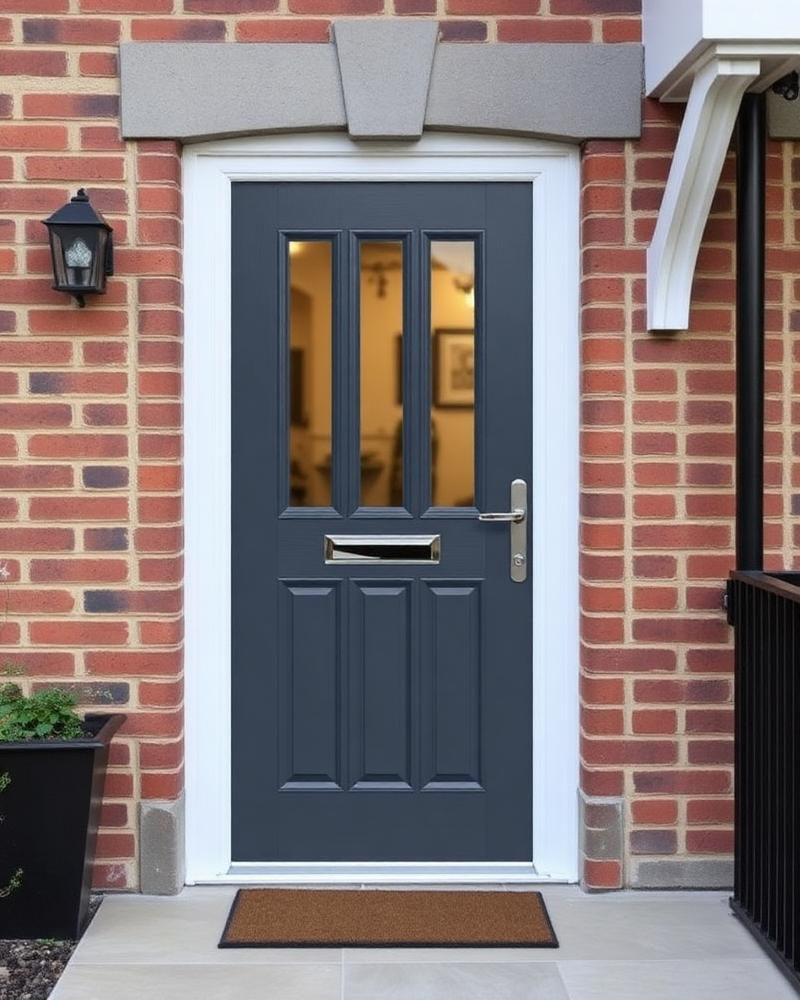
The parts of a uPVC door lock
The cylinder or barrel is where the key goes. Turning it works the gearbox, the central case behind the handle, which drives hooks, rollers or bolts along the full height of the door into keeps on the frame. The handle lifts to engage those points. All of these sit on one long faceplate that runs down the door edge.
Because the parts work together, a fault in one can look like a fault in another. A stiff key may be a worn barrel, or a door that has dropped and is pulling the locking points out of line. Checking the door alignment first avoids replacing a lock that was only struggling against a misaligned frame.
Replacing a uPVC door lock barrel
A uPVC door lock barrel change is the most common lock job. It suits lost keys, moving into a new home, a worn cylinder that sticks, or upgrading security. The barrel is held by a single retaining screw in the door edge, and the new one must be the correct length on each side so it does not protrude.
Anti snap locks are a popular upgrade. Older cylinders can be vulnerable to snapping, a forced-entry method where the exposed part is broken off. An anti-snap cylinder is designed to resist this. Our guide to uPVC door not locking properly covers the warning signs that a lock needs attention.
Gearbox and full mechanism replacement
When the handle spins without locking, the key turns but nothing engages, or the door locks only partly, the upvc door lock gearbox is often the culprit. In some doors the gearbox can be replaced on its own; in others the whole upvc door lock mechanism has to be changed because the gearbox is built into the strip.
Mechanisms vary by manufacturer, so the replacement has to match the backset, the spacing of the handle and cylinder, and the position of the locking points. Measuring the existing lock carefully means the new one fits the existing keeps in the frame, rather than needing new holes cut into the door.
Composite door locks
Composite doors locks generally follow the same multipoint principle as uPVC doors, so barrels, gearboxes and mechanisms can be renewed in a similar way. The door slab is thicker and may need a different cylinder length, and the mechanism must suit the manufacturer's design. The same checks on alignment apply before any parts are ordered.
If the problem is not the lock at all but a dropped door, worn hinges or failing seals, our uPVC door repairs page explains how those faults are put right. For window locks rather than doors, see window lock repair.
Arranging a uPVC door lock change
If the door cannot be locked at all, treat it as a security concern and mention it when you get in touch. Otherwise, note the symptoms: whether the key is stiff, the handle feels loose, or the door has to be pushed or lifted to lock. A photograph of the faceplate on the door edge helps identify the mechanism.
Fairway Window Systems Ltd offers a free home survey and written quote. Use the existing enquiry form to describe the problem. If the door itself has reached the end of its life, our uPVC doors page covers replacement options.
Frequently asked questions
What is involved in replacing a uPVC door lock?
The failed part is identified first, whether barrel, gearbox or the full mechanism, then a matching replacement is fitted and the door alignment checked so the locking points engage smoothly.
How long does a uPVC door lock change take?
A barrel change is usually quick. A gearbox or full mechanism takes longer, particularly if a matching part has to be ordered for that door.
What affects the cost of uPVC door lock replacement?
Which part has failed, the lock manufacturer and size, whether an anti-snap upgrade is wanted and whether the door needs adjusting as well.
Should I upgrade to anti-snap locks?
If the door has an older cylinder, an anti-snap cylinder is designed to resist snapping, a common forced-entry method, and is a common upgrade when the barrel is changed.