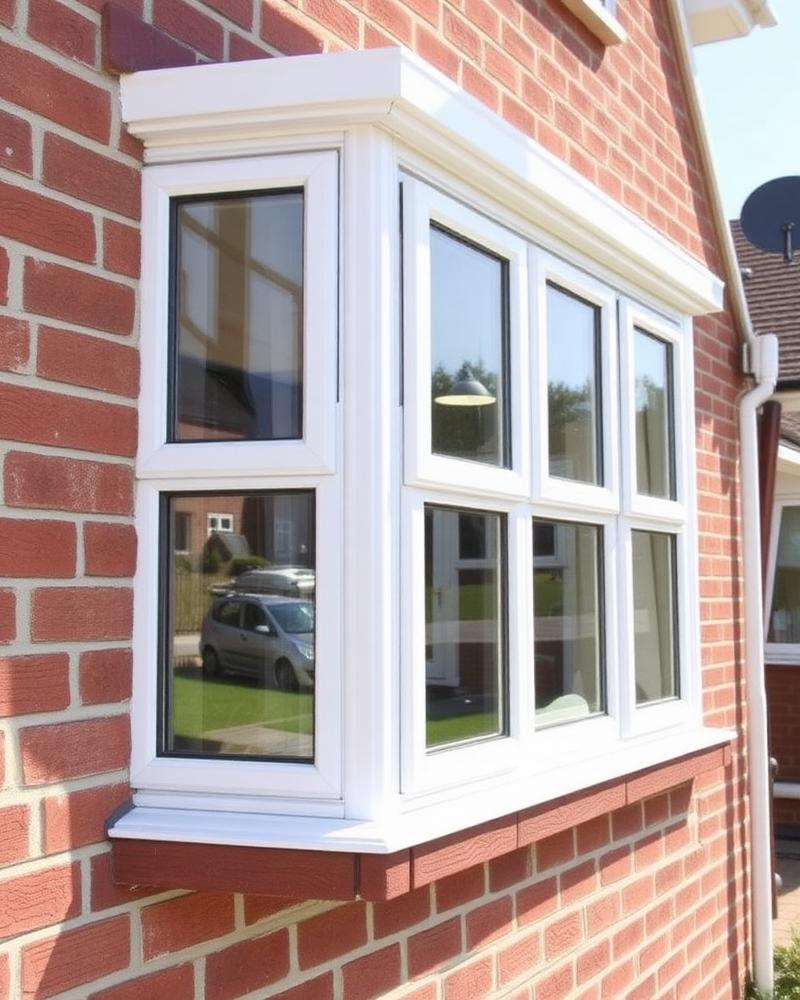
Window boards and external sills
It helps to separate the two. The window board is inside, covering the top of the wall below the frame. The external sill is outside, shedding rainwater away from the wall. Both are often called window sills, and both may need attention when windows are changed, but they do different jobs and are made differently.
Replacement window sills outside are usually part of the new window, attached to the bottom of the frame. Inside, the board may be kept, overlaid or replaced, depending on its condition and how it meets the new frame.
Why replace window boards with new windows
Taking out an old frame can crack or chip a board, especially timber or tiled sills that were bedded under it. A new frame may also sit at a different depth in the opening, leaving a gap at the back of the old board. Years of condensation can leave timber boards swollen, stained or soft.
Planning new boards as part of the window replacement means the frame and board are fitted together, with a neat joint and less making good afterwards. It is far simpler than trying to replace a board later once the window, plaster and decoration are finished.
uPVC window sills and other finishes
uPVC window sills are popular inside because they wipe clean, do not need painting and cope with condensation. They come in white and in woodgrain or coloured finishes to suit the frames. Timber and MDF boards can be painted to match the room, while some homes suit stone or tiled sills that are kept as they are.
Consider how the room is used. A kitchen or bathroom board takes moisture and cleaning, a living room board may need to hold plants or ornaments, and a deep bay may want a wider board that works almost as a shelf.
Sizing and fitting
Each board is measured to the opening, including any return into the reveals and the overhang at the front. Older walls are rarely straight, so boards are cut and scribed to sit neatly against uneven plaster. The board is fixed level and sealed where it meets the frame, so condensation runs off rather than into the joint.
Overlay boards can sometimes be fitted over a sound existing sill to give a fresh surface without disturbing the wall. Where a board has failed, it is removed and replaced. Any plaster or paint touched in the process should be described in the written quote, so you know what making good is included.
Planning boards with your replacement windows
Mention window boards when you ask for a quote for new windows, and say which rooms you want them in. Having them on the same schedule means each opening is planned once and finished in one visit, rather than leaving loose ends inside after the windows are in.
Fairway Window Systems Ltd offers a free home survey and written quote. Use the existing enquiry form to request it, and see our windows page for the frames, glass and styles available.
Frequently asked questions
What is involved in fitting new window boards?
Each opening is measured, the old board is removed or overlaid, and the new board is cut and scribed to the wall, fixed level and sealed where it meets the frame.
How long does window board fitting take?
When fitted with new windows, boards are usually installed as each window is finished. Overlay boards on existing sills are generally quicker than full replacement.
What affects the cost of window boards?
The number and size of openings, board material and finish, whether old boards must be removed and how much making good is needed.
Are uPVC window sills a good choice inside?
They suit many rooms because they wipe clean, need no painting and cope with condensation. Timber or stone may suit period rooms better.