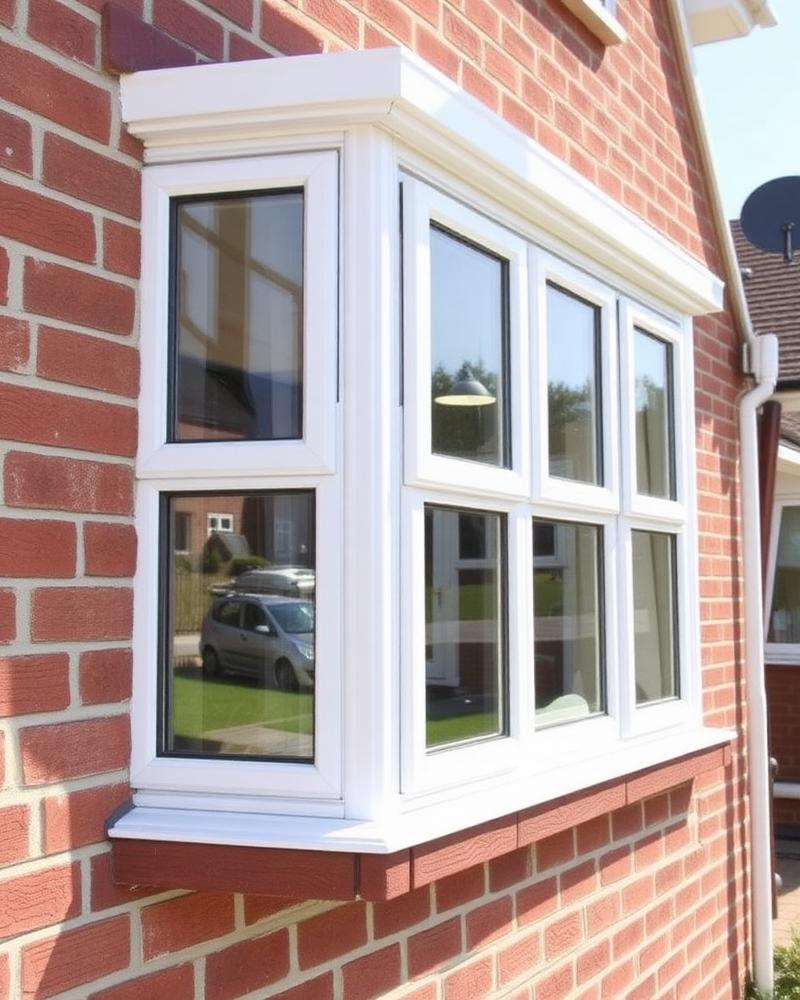
Three different kinds of seal
The opening sash closes against a rubber gasket that runs around the frame. The glass sits between glazing gaskets that hold the sealed unit in place. And around the outside of the frame, a bead of sealant closes the joint to the brickwork or render. Each one can fail separately, and each causes slightly different symptoms.
This page is about those external seals and gaskets. A sealed unit that has misted up between the panes is a different fault, where the seal inside the glass unit itself has broken down; our misted double glazing page covers that repair.
Window leaking when it rains
A leaking window can have several causes. Water at the bottom corner of the frame during heavy rain often points to blocked drainage slots in the frame, which can be cleared. Damp around the edge of the frame on the inside wall suggests the outer perimeter sealant has cracked or pulled away from the masonry.
Water coming past the opening sash may mean a flattened or shrunken gasket, or a sash that has dropped and no longer presses evenly against it. Noting where the water appears, and in which weather, helps narrow it down. Persistent leaks should be looked at promptly, because water reaching plaster or timber can cause wider damage.
Draughts, noise and worn gaskets
Gaskets lose their springiness with age and sunlight. When that happens, you may feel a draught along the opening edge, hear more noise from outside, or see light around a closed sash. Hinges and locking keeps can sometimes be adjusted to close the window more tightly, but a perished gasket usually needs replacing.
For other draught causes, such as warped sashes, worn hinges or poorly fitted frames, see our draughty windows page. Renewing seals works best when the window itself is sound and closes properly; it will not cure a frame that is badly distorted.
uPVC replacement door and window seals
On uPVC windows and doors, many gaskets sit in a groove in the frame and can be pulled out and replaced with a matching profile. The right profile matters, because a gasket that is too thin will not seal and one that is too thick can stop the sash closing. Door seals follow the same principle and wear in a similar way.
Perimeter sealant is removed back to clean surfaces before a new bead is applied, so it bonds properly to both frame and wall. Where the gap is wide, a backing material may be needed first. Good preparation makes far more difference to how long the new seal lasts than the bead itself.
Repair or replace the window?
If the frame and glass are in good condition, renewing the seals is often a sensible way to extend the life of a window. If the frames are distorted, the sealed units have failed widely or the hardware is worn throughout, replacement may make more sense. Our window and door repairs page explains how that decision is approached.
Fairway Window Systems Ltd offers a free home survey and written quote. Use the existing enquiry form to say which windows are affected and whether the problem is a leak, a draught or both, so the survey can check the right seals.
Frequently asked questions
What is involved in window seal replacement?
The cause is identified first, then worn gaskets are pulled out and replaced with a matching profile, or old perimeter sealant is removed and a new bead applied to clean surfaces.
How long does it take to replace window seals?
It depends on how many windows are affected and which seals need renewing. Matching gaskets may need ordering. The timing is set out with the quote.
What affects the cost of window seal replacement?
The number of windows, which seals have failed, the gasket profile and the condition of the surrounding surfaces. Any adjustment to sashes also affects the work.
Why is my window leaking when it rains?
Common causes are blocked drainage slots, cracked perimeter sealant or a worn sash gasket. Where the water appears helps show which one.