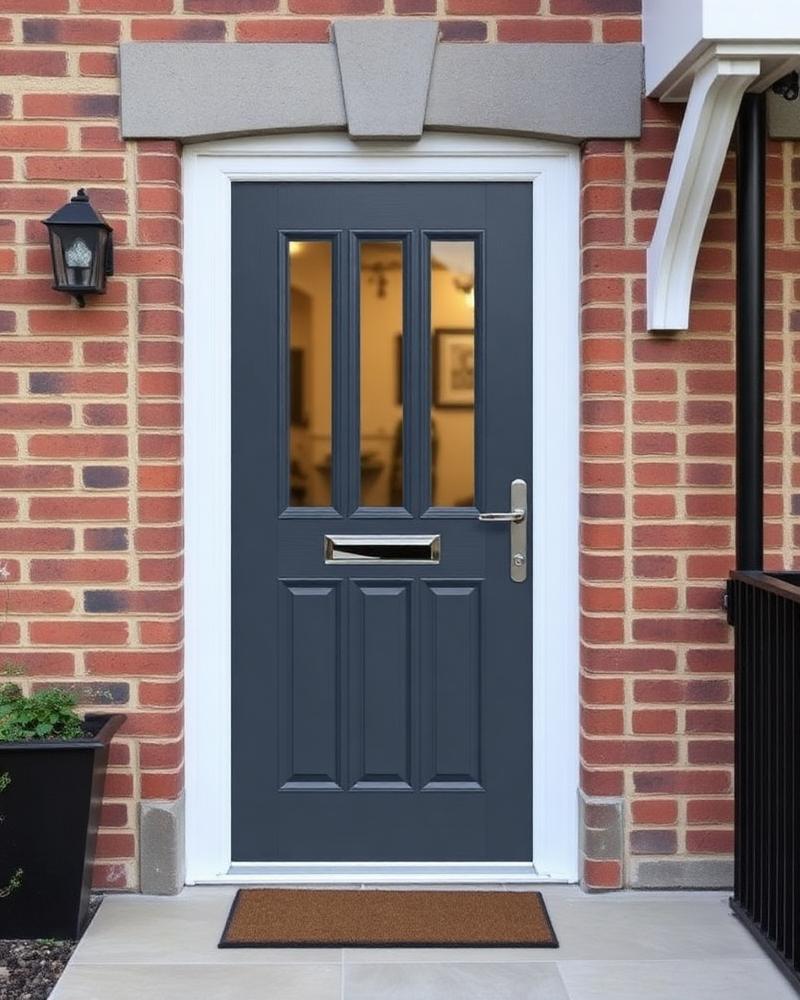
Choosing a front door for a Cardiff terrace or semi
Cardiff terraces often open straight onto the pavement or a short front path, with a narrow doorway and sometimes a fanlight above. Here a door with a traditional panel layout and a small glazed top section usually looks right, and a glazed fanlight or side panel can bring light into a narrow hall.
Semis and detached homes often have wider openings, porches or side panels on one or both sides. That gives more freedom with style, from plain contemporary slabs to cottage designs. Our front doors in Cardiff page shows the wider range of front door types if you are still deciding on material.
Security
Our composite doors come with multi-point locking, which secures the door to the frame at several points along its edge rather than at one latch, and anti-snap cylinders, as set out on our main composite doors page.
Fit matters as much as hardware. A door that is measured and installed square to its frame closes properly and engages every locking point. At the survey we look at the opening, the threshold and the frame so the new door can be fitted correctly.
Colours, glass and furniture
Composite doors come in a wide choice of colours, from classic blacks, blues and greens to greys and softer shades. Many can be one colour outside and white inside. The glass options run from fully solid doors to small decorative panes, larger obscured panels and matching side panels.
Handles, letter plates, knockers and numerals finish the look, in a range of finishes. We bring samples to the survey so you can see colours and finishes against your own brickwork.
Back and side doors
Back and side doors are often overlooked, but they are just as much a way into the house. A composite back door gives the same locking and solid build as the front, in a simpler style if you prefer, and a part-glazed design can let more light into a kitchen or utility room.
If you want a wider opening to the garden, patio or bifold doors may suit better. We can talk through both at the same visit.
Composite vs uPVC vs timber
Composite doors are built with a solid core and a tough outer skin, which gives a heavier, more solid feel than a standard uPVC panel door. uPVC doors are a lower-cost option and still a sensible choice for many back doors; see uPVC doors in Cardiff. Timber has a natural look but needs regular painting or staining to stay in good condition.
Our guide to composite vs uPVC doors compares them in more depth, and the composite door cost guide explains the factors that shape the price.
Survey and fitting
We measure the opening, check the frame and threshold, and help you choose style, colour, glass and furniture. You then get a written quote. Once you have ordered, the door is made to measure and we agree a fitting date. On the day the old door and frame come out and the new one is fitted, sealed and checked so that it closes and locks properly. Your door is covered by our 10-year guarantee, and finance can be introduced through an FCA-regulated provider.
Replacing windows as well? See our page on double glazing in Cardiff.
Frequently asked questions
Can a composite door fit a narrow Cardiff terrace doorway?
Yes. Every door is made to measure, so it is built to the size of your opening rather than a standard size.
Can I keep my existing fanlight above the door?
In many cases the whole door and frame are replaced together, and a new glazed top light can be included. We will look at the existing arrangement at the survey and explain the options.
Can the door be a different colour inside?
Many composite doors can be one colour outside and white inside, so a bold front door does not change the look of your hallway.
Should my back door be composite as well?
It does not have to be. Composite and uPVC can both be considered for the back entrance. We can quote both so you can compare.
Is finance available on a new door?
Finance can be introduced through an FCA-regulated provider. Ask at your survey.